

How Blood Detection Testing Works
How does blood detection testing work? Learn how RSID Blood confirmatory testing detects glycophorin A to help identify the presence of human blood on an item.

Quick Answer: How Does Blood Detection Testing Work?
Blood detection testing is used to determine whether blood is present on an item. Confirmatory methods such as RSID Blood testing use immunological detection of the human-specific protein glycophorin A to help confirm the presence of human blood on clothing, personal items, and other submitted materials.
In This Article
What is blood detection testing?
What does RSID Blood detect?
What is glycophorin A?
Confirmatory vs presumptive blood testing
What items can be tested?
Can blood detection be combined with DNA testing?
What Is Blood Detection Testing?
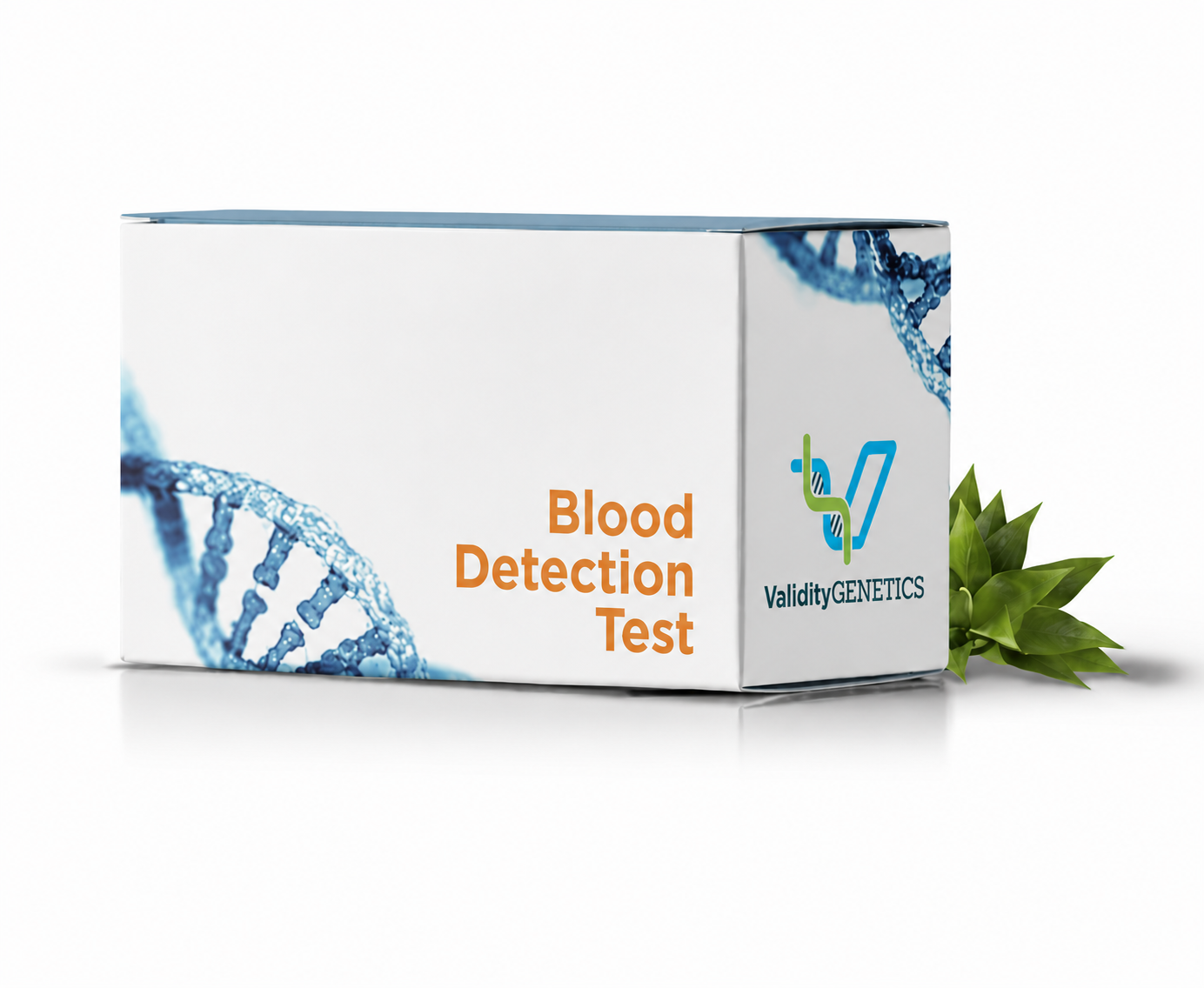
This is not a physical product. This is a service.
We do NOT ship anything to you for this test.
You must ship your items/samples to our laboratory.
Blood detection testing is a laboratory procedure used to determine whether blood may be present on an item.
This type of testing may be performed on:
clothing
bedding
personal items
fabrics
tissues
other materials suspected of containing blood
The goal is to identify biological evidence that may not be visible or easily recognized.
What Does RSID Blood Detect?
The blood detection test offered by Validity Genetics uses RSID Blood, a confirmatory testing method designed to identify the human-specific protein glycophorin A.
Glycophorin A is found on the surface of human red blood cells and serves as a biological marker that helps laboratories determine whether human blood is present on a tested item.
When glycophorin A is detected, the findings support the conclusion that human blood may be present.
What Is Glycophorin A?
Glycophorin A is a protein located on the membrane of human red blood cells.
Because it is strongly associated with human blood, it can be used as a target for laboratory testing designed to identify blood evidence.
By detecting glycophorin A, laboratories can distinguish blood evidence with greater specificity than many preliminary screening methods.
Confirmatory vs Presumptive Blood Testing
Not all blood tests provide the same level of information.
Understanding the difference between presumptive and confirmatory testing is important when evaluating results.
Presumptive Blood Tests
Presumptive tests are designed to indicate that blood may be present.
Examples include:
Kastle-Meyer testing
Hemastix testing
Luminol screening
These methods are useful screening tools but may react with substances that produce similar chemical responses.
As a result, presumptive tests are generally considered preliminary indicators.
Confirmatory Blood Tests
Confirmatory tests are designed to identify blood with greater specificity.
RSID Blood testing uses immunological detection of glycophorin A to help confirm the presence of human blood.
Because this method targets a blood-specific protein, it provides stronger evidence than a preliminary screening test alone.
What Types of Items Can Be Tested?
Many different items may be suitable for blood detection testing.
Examples include:
clothing
bedding
fabrics
personal belongings
tissues
other submitted materials
The success of testing depends on the condition of the item and the biological material available for analysis.
Can Blood Be Detected After Cleaning?
The answer depends on several factors.
These include:
the amount of blood originally present
the cleaning method used
environmental exposure
the condition of the item
Cleaning may reduce biological material, but it does not necessarily eliminate every trace.
Laboratory testing is often required to determine whether detectable evidence remains.
Blood Detection vs DNA Testing
Blood detection testing and DNA testing answer different questions.
Blood Detection Testing
Blood detection testing helps determine whether blood is present on an item.
DNA Testing
DNA testing focuses on recovering and analyzing genetic material from biological evidence.
If sufficient DNA is recovered, scientists may be able to create a DNA profile and compare it to known reference samples.
Learn more about DNA comparison testing here: How DNA Comparison Testing Works
Can Blood Detection Be Combined with DNA Testing?
Yes.
In some cases, blood detection testing may be performed first to determine whether blood is present.
If biological material is confirmed and sufficient DNA is available, additional DNA testing may be possible.
This combination can provide more information than either test alone.
Understanding Blood Detection Testing
Blood detection testing provides a scientific method for identifying blood evidence on clothing, personal items, and other materials. Confirmatory methods such as RSID Blood testing use immunological detection of glycophorin A to help determine whether human blood is present.
Understanding how these tests work helps individuals better interpret results and understand what information blood evidence may provide.
Related Services



Related Articles
How Saliva Detection Testing Works
How Semen Detection Tests Work
How DNA Comparison Testing Works
How Accurate are Infidelity DNA Tests?
Cited References:
National Institute of Justice. DNA Evidence Basics
https://nij.ojp.gov/topics/articles/dna-evidence-basicsAmerican Academy of Forensic Sciences (AAFS)
https://www.aafs.orgInternational Society for Forensic Genetics (ISFG)
https://www.isfg.org

What Causes an Infidelity DNA Test to Be Inconclusive?
What does an inconclusive infidelity DNA test result mean? Learn why inconclusive results occur and what factors can affect DNA analysis and interpretation.

Quick Answer: What Causes an Infidelity DNA Test to Be Inconclusive?
An infidelity DNA test may be considered inconclusive when the laboratory obtains some DNA information but not enough to confidently answer the testing question. Factors such as low DNA quantity, degraded samples, mixed DNA profiles, or incomplete genetic information can contribute to inconclusive results.
In This Article
What does inconclusive mean?
Inconclusive vs no DNA found
Common causes of inconclusive results
Can additional testing help?
How often do inconclusive results occur?
What Does "Inconclusive" Mean?
An inconclusive result means that testing produced some information, but the findings were not strong enough to reach a definitive conclusion.
Unlike a situation where no DNA is recovered, inconclusive results typically occur when:
DNA is present
testing was successful
the available information is insufficient for a clear interpretation
This means the laboratory may have recovered DNA, but additional information would be needed to confidently answer the testing question.
Inconclusive vs No DNA Found
These two outcomes are often confused.
No DNA Found
No usable DNA profile could be developed.
The laboratory was unable to recover sufficient genetic material for analysis.
Inconclusive Result
DNA was recovered and analyzed, but the findings were not strong enough to support a definitive conclusion.
This may be because the profile was too degraded or not enough alleles reached reporting the reporting threshold to be included in the results.
Learn more here: What Happens if no DNA is Found?
Common Causes of Inconclusive Results
Several factors can contribute to an inconclusive outcome.
Limited DNA Quantity
Sometimes only a small amount of DNA is present on an item.
When DNA levels are low, scientists may obtain only a partial DNA profile.
Partial profiles can limit interpretation and may not provide enough information for a definitive conclusion.
Degraded DNA
DNA naturally breaks down over time.
Factors such as:
heat
sunlight
moisture
environmental exposure
can damage genetic material and reduce the quality of the DNA profile.
Mixed DNA Profiles
One of the most common causes of inconclusive interpretation is the presence of multiple contributors.
For example, a report may indicate:
"A mixed DNA profile from a Male and Female contributor."
When multiple individuals contribute DNA to the same item, interpretation becomes more complex.
Learn more here: What Happens if Multiple DNA Profiles are Found?
Partial DNA Profiles
In some situations, scientists may recover only a portion of the genetic markers typically used for comparison.
Although a partial profile may provide useful information, it may not be sufficient for a definitive conclusion.
Can Biological Fluid Testing Still Be Helpful?
Yes.
Biological fluid testing and DNA testing answer different questions.
For example:
RSID Semen detects semenogelin
RSID Saliva detects alpha-amylase
RSID Blood detects glycophorin A
Even when DNA comparison results are inconclusive, biological fluid testing may still provide meaningful information about the presence of a particular biological substance.
Can Additional Testing Help?
In some cases, yes.
Possible options may include:
testing additional items
testing additional areas of an item
providing reference samples
performing biological fluid detection testing
in cases where male DNA may be overshadowed by female DNA a Y-STR DNA test may be more sensitive to male DNA. This may lead to a male Y-STR DNA profile being found
The best approach depends on the available evidence and the goals of testing.
How Common Are Inconclusive Results?
Most samples do not produce inconclusive results.
However, inconclusive findings can occur in real-world testing because biological evidence is often affected by:
environmental exposure
degradation
washing
multiple contributors
These factors are part of the reason why every sample is unique.
Understanding Inconclusive Results
An inconclusive infidelity DNA test result does not necessarily mean testing failed. Instead, it means that DNA evidence was recovered and analyzed, but the findings were not strong enough to support a definitive interpretation or match.
Understanding the factors that contribute to inconclusive results can help individuals better understand their reports and determine whether additional testing may be appropriate.
Related Services

Related Articles
What Happens if no DNA is Found?
What happens if multiple DNA profiles are found?
How DNA comparison testing works.
How accurate are infidelity DNA tests?
Cited References:
National Human Genome Research Institute. DNA and Genetic Analysis
https://www.genome.govNational Institute of Standards and Technology (NIST). DNA Analysis Methods
https://www.nist.gov/topics/forensic-science/dna-analysisInternational Society for Forensic Genetics (ISFG)
https://www.isfg.org

What Happens If No DNA Is Found?
What happens when a DNA test finds no DNA? Learn why DNA may not be recovered from a sample and what factors can affect DNA testing results.

Quick Answer: What Happens If No DNA Is Found?
If no DNA is found during testing, it means the laboratory was unable to recover enough genetic material to develop a usable DNA profile. This can happen for many reasons, including environmental exposure, washing, degradation, or simply because very little biological material was present on the item.
In This Article
What does "no DNA found" mean?
Why DNA may not be recovered
Does no DNA mean nothing was present?
Can biological fluids be present without DNA?
What happens next?
What Does "No DNA Found" Mean?
When a laboratory reports that no DNA was found, it means there was insufficient genetic material available to generate a DNA profile.
This does not necessarily mean that:
an item was never touched
biological material was never present
testing was performed incorrectly
It simply means that a usable DNA profile could not be obtained from the submitted sample.
Why Might DNA Not Be Recovered?
Several factors can affect whether DNA can be successfully recovered from an item.
Limited Biological Material
Sometimes only a very small amount of biological material is deposited on an item.
Examples include:
brief contact
minimal saliva
trace skin cells
In these situations, there may not be enough DNA available for analysis.
Environmental Exposure
DNA naturally degrades over time.
Factors that can affect DNA recovery include:
heat
sunlight
moisture
bacterial activity
The longer biological material is exposed to these conditions, the greater the chance that DNA may degrade.
Washing and Cleaning
Washing can reduce the amount of biological material present on an item.
Depending on:
the fabric
the washing method
the amount of material originally present
DNA may become more difficult to recover.
Sample Age
Older samples may contain degraded DNA.
In some cases, DNA can still be recovered from older items. In other situations, degradation may prevent a usable profile from being developed.
Does No DNA Mean Nothing Was Present?
No.
This is one of the most common misconceptions about DNA testing.
The inability to recover DNA does not necessarily mean biological material was never present.
For example:
DNA may have degraded over time
the quantity may have been too low for analysis
biological evidence may have been reduced through washing or environmental exposure
Laboratory results can only reflect what is detectable at the time of testing.
Can Biological Fluids Be Present Without Recoverable DNA?
Yes.
This is an important distinction.
Biological fluid detection and DNA testing are not the same thing.
A laboratory may be able to identify evidence of a biological fluid even when insufficient DNA is present to generate a profile.
For example:
RSID Semen detects semenogelin
RSID Saliva detects alpha-amylase
RSID Blood detects glycophorin A
These tests target biological markers rather than DNA itself.
As a result, a biological fluid may sometimes be detected even when no usable DNA profile can be developed.
Can Additional Testing Help?
In some situations, additional testing may be useful.
Examples include:
testing additional areas of an item
testing additional items
performing biological fluid detection testing
performing a Y-STR test in cases where female DNA may overshadow low amounts of male DNA
The best approach depends on the evidence available and the goals of testing.
What Results Might You Receive?
When DNA cannot be recovered, reports may indicate:
no DNA profile obtained
insufficient DNA for analysis
no interpretable DNA profile developed
The exact wording may vary depending on the type of testing performed.
Understanding "No DNA Found" Results
A finding of "no DNA found" simply means that a usable DNA profile could not be developed from the submitted material. This can occur for many reasons, including degradation, environmental exposure, limited biological material, or washing.
Understanding these factors helps explain why DNA recovery is not always possible and why biological evidence and DNA evidence are not necessarily the same thing.
Related Services
Related Articles
https://validitygenetics.com/news/how-dna-comparison-testing-works
https://validitygenetics.com/news/what-happens-if-multiple-dna-profiles-are-found
https://validitygenetics.com/news/how-saliva-detection-testing-works
https://validitygenetics.com/news/how-accurate-are-infidelity-dna-tests
Cited References:
National Institute of Justice. DNA Evidence Basics
https://nij.ojp.gov/topics/articles/dna-evidence-basicsNational Institute of Standards and Technology (NIST). DNA Analysis Methods
https://www.nist.gov/topics/forensic-science/dna-analysisInternational Society for Forensic Genetics (ISFG)
https://www.isfg.org
How Saliva Detection Testing Works
How does saliva detection testing work? Learn how RSID Saliva confirmatory testing detects the human-specific protein alpha-amylase to help identify saliva on an item.
Quick Answer: How Does Saliva Detection Testing Work?
Saliva detection testing is used to determine whether saliva is present on an item. Confirmatory methods such as RSID Saliva testing use immunological detection of the human-specific protein alpha-amylase to help confirm the presence of saliva on clothing, personal items, and other submitted materials.
In This Article
What is saliva detection testing?
What does RSID Saliva detect?
What is alpha-amylase?
Confirmatory vs presumptive saliva testing
What items can be tested?
Can saliva testing be combined with DNA testing?
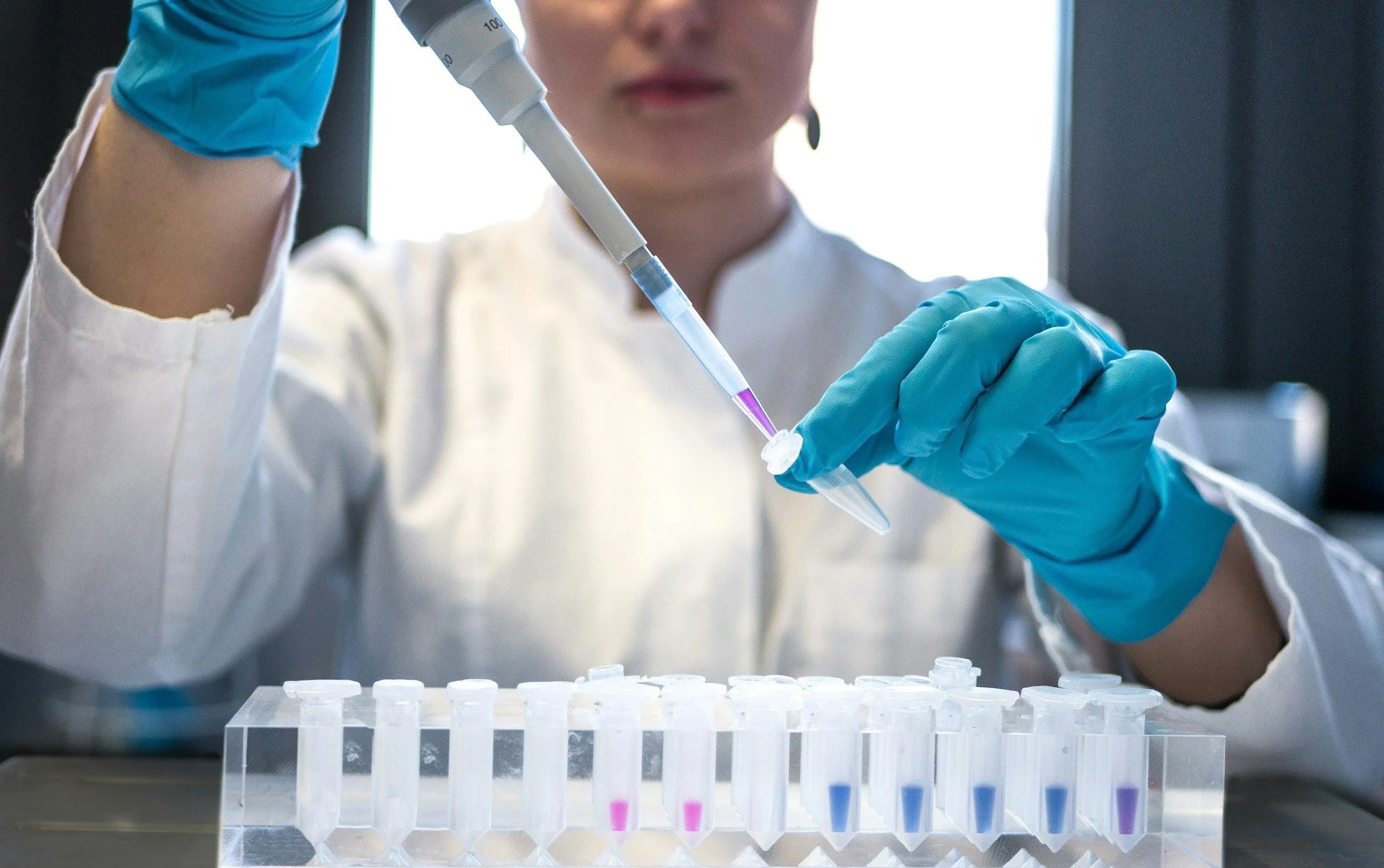
This is not a physical product. This is a service.
We do NOT ship anything to you for this test.
You must ship your items/samples to our laboratory.
What Is Saliva Detection Testing?
Saliva detection testing is a laboratory procedure used to determine whether saliva may be present on an item.
This type of testing may be performed on:
clothing
bedding
tissues
drinking containers
personal items
other materials suspected of containing saliva
The goal of the test is to identify biological evidence that may not be visible to the naked eye.
What Does RSID Saliva Detect?
The saliva detection test offered by Validity Genetics uses RSID Saliva, a confirmatory testing method designed to identify the human-specific protein alpha-amylase.
Alpha-amylase is commonly found in human saliva and serves as a biological marker that helps laboratories determine whether saliva is present on a tested item.
When alpha-amylase is detected, the results support the conclusion that saliva may be present on the sample.
What Is Alpha-Amylase?
Alpha-amylase is an enzyme naturally found in human saliva.
Its primary biological function is to help begin the digestion of starches in the mouth.
Because alpha-amylase is strongly associated with saliva, it can be used as a target for laboratory testing designed to identify saliva evidence.
Confirmatory vs Presumptive Saliva Testing
Not all saliva tests are the same.
Understanding the difference between presumptive and confirmatory testing is important when evaluating results.
Presumptive Saliva Tests
Presumptive tests are designed to indicate that saliva may be present.
These tests serve as screening tools but may react with substances that produce similar biological signals.
Because of this, presumptive tests are generally considered preliminary indicators.
Confirmatory Saliva Tests
Confirmatory tests are designed to identify saliva with greater specificity.
RSID Saliva testing detects alpha-amylase using an immunological testing process.
Because this method targets a saliva-associated protein, it provides greater confidence than a preliminary screening test alone.
What Types of Items Can Be Tested?
Many different items may be suitable for saliva detection testing.
Examples include:
clothing
collars and cuffs
bedding
pillowcases
tissues
cups and drink containers
personal items
The success of testing depends on factors such as the condition of the item and the amount of biological material present.
Can Saliva Be Detected After Washing?
Washing can reduce or remove biological material from an item.
However, whether saliva remains detectable depends on:
the amount originally deposited
the type of fabric
the washing process used
environmental exposure
Each sample is unique, which is why laboratory testing is often required to determine whether detectable biological material remains.
Learn more here:
https://validitygenetics.com/news/can-saliva-be-detected-on-clothing
Can Saliva Detection Be Combined with DNA Testing?
Yes.
Saliva detection testing and DNA testing serve different purposes.
Saliva detection testing helps determine whether saliva is present.
DNA testing focuses on recovering and analyzing genetic material.
If sufficient DNA is recovered from a sample, additional testing may be possible to compare DNA profiles to known reference samples.
Learn more about DNA comparison testing here: How DNA Comparison Testing Works
Understanding Saliva Detection Testing
Saliva detection testing provides a scientific method for identifying saliva evidence on clothing, personal items, and other materials. Confirmatory methods such as RSID Saliva testing use immunological detection of alpha-amylase to help determine whether saliva is present.
Understanding how these tests work helps individuals better interpret results and understand what information saliva evidence may provide.
Related Services
Related Articles
https://validitygenetics.com/news/can-saliva-be-detected-on-clothing
https://validitygenetics.com/news/how-dna-comparison-testing-works
https://validitygenetics.com/news/how-dna-gets-on-clothing
https://validitygenetics.com/news/how-accurate-are-infidelity-dna-tests
Cited References:
National Institute of Justice. DNA Evidence Basics
https://nij.ojp.gov/topics/articles/dna-evidence-basicsNational Human Genome Research Institute. Enzymes and Proteins in Human Biology
https://www.genome.govInternational Society for Forensic Genetics (ISFG)
https://www.isfg.org

Can Saliva Be Detected on Clothing?
Learn whether saliva can be detected on clothing, how saliva transfers to fabrics, and the factors that affect the ability to identify saliva on an item.

Quick Answer: Can Saliva Be Detected on Clothing?
Yes, saliva can sometimes be detected on clothing if sufficient biological material is present. Modern confirmatory saliva detection tests, such as RSID Saliva, use immunological detection of the human-specific protein alpha-amylase to help confirm the presence of saliva on an item.
In This Article
Can saliva be detected on clothing?
Does saliva contain DNA?
Can saliva survive washing?
How does saliva detection testing work?
What is the difference between saliva detection and DNA testing?
This is not a physical product. This is a service.
We do NOT ship anything to you for this test.
You must ship your items/samples to our laboratory.
How Does Saliva Get on Clothing?
Saliva can be transferred to clothing in a variety of ways.
Examples include:
kissing or close personal contact
speaking, coughing, or sneezing
contact with the mouth
contact with items that contain saliva
When saliva comes into contact with fabric, biological material may become trapped within the fibers of the clothing.
Does Saliva Contain DNA?
Yes.
Saliva contains cells from the inside of the mouth, and these cells contain DNA. Because of this, saliva evidence may sometimes provide two different types of information:
confirmation that saliva is present
DNA that may be analyzed if sufficient biological material is available
In some cases, laboratories may first perform saliva detection testing before attempting DNA analysis.
The ability to obtain a DNA profile depends on the quantity and quality of the biological material present.
What Factors Affect Saliva Detection?
Several factors influence whether saliva may still be detectable on an item.
Amount of Saliva Present
Larger deposits of saliva are generally easier to detect than very small amounts.
Type of Fabric
Different fabrics retain biological material differently.
Textured materials may hold biological material more effectively than smooth fabrics.
Environmental Exposure
Exposure to:
heat
moisture
sunlight
bacteria
can cause biological material to degrade over time.
Washing and Cleaning
Washing may reduce or remove biological material from clothing.
However, depending on the circumstances, biological material may sometimes remain detectable after laundering.
Can Saliva Be Found After Clothing Has Been Washed?
The answer depends on several factors, including:
the amount of saliva originally present
the washing method used
the condition of the fabric
While washing may reduce biological material, it does not necessarily eliminate every trace.
Because each item is different, laboratory testing is often needed to determine whether detectable biological material remains.
Confirmatory vs Presumptive Saliva Testing
Not all saliva tests work the same way.
Some testing methods are considered presumptive tests, meaning they indicate that saliva may be present but cannot definitively confirm it.
Confirmatory tests are designed to identify saliva with greater specificity.
For example, RSID Saliva testing detects alpha-amylase, a protein commonly found in human saliva. Detecting this protein helps confirm the presence of saliva on an item.
Understanding the difference between presumptive and confirmatory testing can help individuals better understand what their results mean.
Saliva Detection vs DNA Testing
Although these tests are often discussed together, they serve different purposes.
Saliva Detection Testing
Saliva detection testing is designed to determine whether saliva is present on an item.
For example, the RSID Saliva test uses immunological detection of the human-specific protein alpha-amylase to help confirm the presence of saliva.
Because this is a confirmatory test, it is designed to identify saliva with greater specificity than many presumptive screening methods.
DNA Testing
DNA testing focuses on analyzing genetic material recovered from biological evidence.
If sufficient DNA is recovered from a sample, scientists may be able to create a DNA profile and compare it to known reference samples.
Learn more about DNA comparison testing here: How DNA Comparison Testing Works
Can Saliva Prove Who Was in Contact With an Item?
Not necessarily.
Finding saliva on an item may indicate that biological material was deposited on the clothing, but interpretation requires context.
Additional testing may be necessary to determine whether a DNA profile can be recovered and compared to a known individual.
What Types of Clothing May Be Tested?
Many different types of clothing may be submitted for testing, including:
shirts
jackets
dresses
undergarments
other fabric items
The success of testing depends on the condition of the item and the biological material present.
Understanding Saliva Evidence on Clothing
Saliva can sometimes be detected on clothing when sufficient biological material remains on the fabric. Factors such as fabric type, environmental exposure, and cleaning methods can all influence whether saliva remains detectable.
Understanding how saliva transfers to clothing and how it may persist over time helps explain what testing may be able to reveal about biological evidence found on an item.
Related Services
Related Articles
https://validitygenetics.com/news/how-dna-gets-on-clothing
https://validitygenetics.com/news/how-dna-comparison-testing-works
https://validitygenetics.com/news/what-happens-if-multiple-dna-profiles-are-found
https://validitygenetics.com/news/how-accurate-are-infidelity-dna-tests
https://validitygenetics.com/news/how-saliva-detection-testing-works
Cited References:
National Institute of Justice. DNA Evidence Basics
https://nij.ojp.gov/topics/articles/dna-evidence-basicsCenters for Disease Control and Prevention. About Genetics
https://www.cdc.gov/genomics/about/index.htmInternational Society for Forensic Genetics (ISFG)
https://www.isfg.org

What Happens If Multiple DNA Profiles Are Found in Infidelity Testing?
What does it mean if a DNA test finds more than one contributor? Learn how mixed DNA profiles are analyzed and what these results may indicate.

Quick Answer: What Does It Mean If Multiple DNA Profiles Are Found in Infidelity Testing?
If multiple DNA profiles are found in a sample, it means biological material from more than one person is present. This is known as a mixed DNA profile, and laboratories analyze these mixtures to determine how many contributors may be involved and whether specific individuals can be included or excluded.
What Is a Mixed DNA Profile?
A mixed DNA profile occurs when DNA from two or more individuals is detected in a single sample.
This can happen when:
multiple people come into contact with the same item
biological fluids and skin cells are present together
items are shared or handled by more than one person
In real-world testing, mixed DNA profiles are very common, especially with items like clothing or bedding.
Example from a Laboratory Report
Based on your reports, you may see language such as:
“Item produced a mixed DNA profile from a Male and Female contributor.”
This means:
DNA from at least two individuals was detected
the laboratory identified both male and female genetic markers
This type of result is frequently seen in infidelity DNA testing when analyzing clothing or personal items.
How Laboratories Analyze Mixed DNA
When multiple DNA contributors are present, laboratories use specialized methods to interpret the results.
The process includes:
Identifying the Number of Contributors
Scientists estimate how many individuals may be present based on the DNA profile.
Separating Genetic Markers
Where possible, analysts distinguish between different contributors based on genetic patterns.
Comparing to Reference Samples
If a known individual’s DNA is provided, the lab determines whether that person:
can be included (cannot be excluded)
is excluded as a contributor
Inclusion vs Exclusion in Mixed DNA Results
Mixed DNA results often include statements about whether a person is included or excluded.
Example: Exclusion
From your report:
“The Male contributor to the reference swab is not consistent with the mixed DNA profile and is excluded as a contributor.”
This means:
The DNA found in the sample does not match that individual
That person is not considered a contributor
Example: Inclusion
In other cases, you may see:
“Cannot be excluded as a contributor.”
This means:
The DNA profile is consistent with that individual
They may be one of the contributors
Why Mixed DNA Profiles Are Common
Mixed DNA profiles are not unusual and often occur because:
clothing is worn over time
items are handled multiple times
biological material can transfer through contact
Even everyday activities can result in DNA from multiple individuals being present on a single item.
Learn more about DNA transfer here: How DNA Gets on Clothing.
What Mixed DNA Results Can Tell You
Mixed DNA results can provide important information, including:
whether multiple individuals contributed DNA
whether a known individual may be included
whether a known individual can be excluded
However, the presence of multiple contributors means the results must be interpreted carefully.
What Mixed DNA Results Do Not Show
It is important to understand what mixed DNA results cannot determine.
They do not show:
when DNA was deposited
how the DNA was transferred
the exact sequence of events
DNA testing provides scientific findings, but interpretation depends on context.
When Additional Testing May Help
In some cases, additional testing can provide more clarity.
Examples include:
testing additional items
providing more reference samples
combining results with biological fluid detection
For example, semen detection testing can help determine whether a specific biological fluid is present.
Learn more here: Semen Detection.
Understanding Mixed DNA Results
Finding multiple DNA profiles in a sample is a common outcome in DNA testing, especially when analyzing personal items. Laboratories use advanced methods to evaluate these mixtures and determine whether specific individuals may be contributors.
Understanding how mixed DNA profiles are interpreted helps individuals better understand their test results and what the findings may indicate.
Cited References:
Butler, J.M. Fundamentals of Forensic DNA Typing (NIST)
https://www.nist.gov/publications/fundamentals-forensic-dna-typingScientific Working Group on DNA Analysis Methods (SWGDAM)
https://www.swgdam.orgInternational Society for Forensic Genetics (ISFG)
https://www.isfg.org

How Accurate Are Infidelity DNA Tests?
How accurate are infidelity DNA tests? Learn how semen detection and DNA comparison testing work, and what factors can affect the reliability of results.

Quick Answer: How Accurate Are Infidelity DNA Tests?
Infidelity DNA tests can be highly reliable when sufficient biological material is present. Confirmatory testing methods, such as RSID semen detection and DNA profiling, are designed to accurately identify biological evidence and compare DNA profiles. However, results depend on factors such as sample quality, environmental exposure, and the presence of multiple contributors.
What Determines the Accuracy of Infidelity DNA Tests?
The accuracy of infidelity DNA testing depends on three main components:
the type of testing performed
the quality of the sample
how the results are interpreted
Understanding each of these helps explain how reliable the results may be.
Confirmatory vs Presumptive Testing
One of the most important factors in accuracy for bodily fluid testing is whether the test is presumptive or confirmatory.
Presumptive Tests
Presumptive tests are screening methods that suggest a biological fluid may be present. These tests are useful for identifying potential areas of interest but are not specific to a single biological substance.
Examples include:
PSA (prostate-specific antigen) tests
acid phosphatase (AP) tests
Confirmatory Tests
Confirmatory tests are designed to identify biological material with high specificity.
For example, the semen detection test used by Validity Genetics is a confirmatory RSID semen detection test that identifies the human-specific protein semenogelin.
Because semenogelin is specific to seminal fluid, detecting this protein provides strong scientific confirmation that semen may be present.
Learn more about semen detection testing here: Semen Detection.
Accuracy of DNA Comparison Testing
DNA comparison testing is another key component of infidelity testing.
When DNA is successfully extracted from a sample, laboratories can:
create a DNA profile
compare it to a known reference sample
determine whether the profiles match or are inconsistent
When a clear DNA profile is obtained, this type of testing is highly reliable for determining whether a known individual may be a contributor.
Learn more about how DNA comparison works here: How DNA Comparison Testing Works.
Factors That Can Affect Accuracy
Even with advanced testing methods, several real-world factors can influence results.
Sample Quality
Samples with limited or degraded DNA may not produce complete results.
Examples:
very small biological deposits
heavily degraded material
Environmental Exposure
DNA can degrade over time due to:
heat
moisture
sunlight
bacterial activity
Learn more about DNA transfer and persistence here: How DNA Gets on Clothing.
Washing and Cleaning
Washing can reduce the amount of biological material present, but it may not always remove all detectable evidence.
Mixed DNA Samples
Many real-world samples contain DNA from multiple individuals.
Reports may indicate:
“a mixed DNA profile from a Male and Female contributor”
These mixed samples can make interpretation more complex, but laboratories are trained to evaluate multiple contributors. Advanced tests such as as Differential Extraction may be an option in cases like this.
What Infidelity DNA Tests Can Show
Infidelity DNA testing can provide scientific information about:
whether biological material is present
whether semen may be detected
whether DNA profiles are present
whether a known individual can be included or excluded as a contributor
Understanding the Limitations
It’s important to understand that DNA testing provides scientific findings, not a narrative of events.
Results are based on:
the biological material present
the quality of the sample
the comparison performed
Context is important when interpreting any DNA result.
Understanding Infidelity DNA Test Accuracy
Infidelity DNA testing uses scientifically validated methods to detect biological material and analyze DNA profiles. When sufficient material is present and testing conditions are favorable, results can provide reliable and meaningful information.
Understanding how these tests work, along with the factors that influence accuracy, helps individuals interpret results and make informed decisions about testing options.
Cited References:
National Institute of Justice. DNA Evidence Basics
https://nij.ojp.gov/topics/articles/dna-evidence-basicsNational Institute of Standards and Technology (NIST). DNA Analysis Methods
https://www.nist.gov/topics/forensic-science/dna-analysisForensic Science International. DNA Transfer and Persistence Studies
https://www.sciencedirect.com/journal/forensic-science-international

What Do Infidelity DNA Test Results Look Like?
What do infidelity DNA test results actually show? Learn how to read semen detection findings, DNA profiles, and comparison results from real lab reports.

Quick Answer: What Do Infidelity DNA Test Results Show?
Infidelity DNA test results typically show whether biological material such as semen is detected, whether DNA profiles are present, and whether those DNA profiles match or exclude known individuals. Results may also indicate if multiple contributors are present in a sample.
What Is Included in an Infidelity DNA Test Report?
Infidelity DNA test reports are structured to clearly present:
the items submitted for testing
the type of testing performed
the findings for each item
DNA profile results
interpretation of those results
Reports often include both a written summary and a detailed DNA profile table.
Example: Report Overview Section
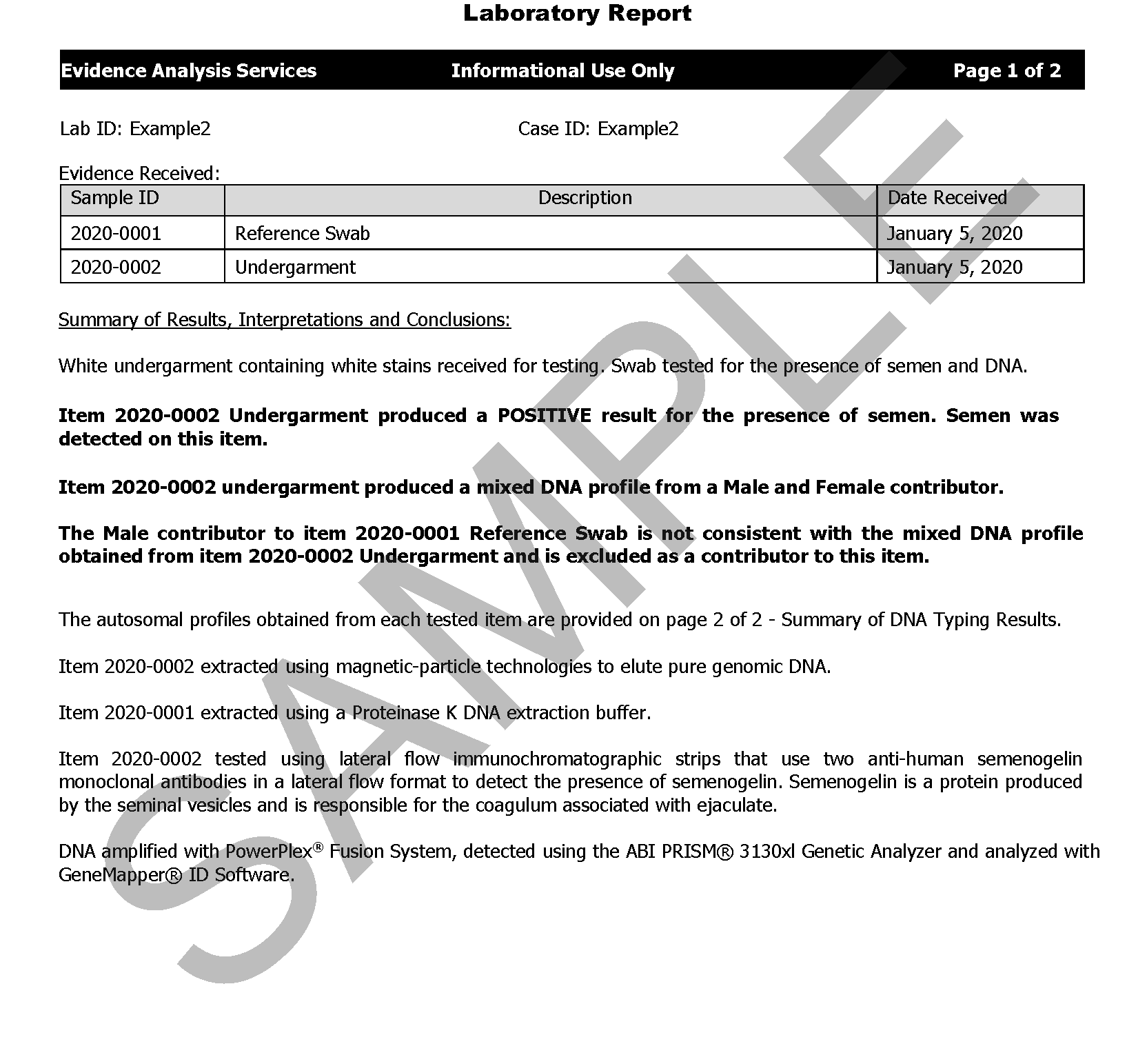
At the beginning of the report, you will typically see:
Lab ID and Case ID
Evidence Received, such as:
reference swab
clothing or undergarments
Descriptions of each item tested
This section confirms what was tested and when it was received.
Understanding the Summary of Results
The most important section of the report is:
“Summary of Results, Interpretations and Conclusions”
This section explains the findings in plain language.
Example: Positive Semen Detection
From your report:
“Item 2020-0002 Undergarment produced a POSITIVE result for the presence of semen. Semen was detected on this item.”
This means:
A confirmatory test detected semen-specific markers
The result is not presumptive, it is confirmed
This is a key finding in tests like: Complete Infidelity DNA Test
Understanding DNA Profile Results
Reports often include statements such as:
“Item produced a mixed DNA profile from a Male and Female contributor.”
This means:
DNA from more than one person is present
The laboratory identified multiple contributors
What Is a Mixed DNA Profile?
A mixed DNA profile occurs when:
biological material from multiple individuals is present on the same item
DNA from those individuals is detected together
This is common in real-world samples.
Understanding Inclusion and Exclusion
One of the most important parts of the report is whether a known individual is included or excluded.
Example: Exclusion Statement
From your report:
“The Male contributor to the Reference Swab is not consistent with the mixed DNA profile obtained from the undergarment and is excluded as a contributor to this item.”
This means:
The reference individual’s DNA does not match the DNA found on the item
That individual is excluded as a contributor
Example: Inclusion Language
In other reports, you may see language such as:
“Cannot be excluded as a contributor”
This means:
The DNA is consistent with that individual
The person may be a contributor




Example: Multiple Item Testing
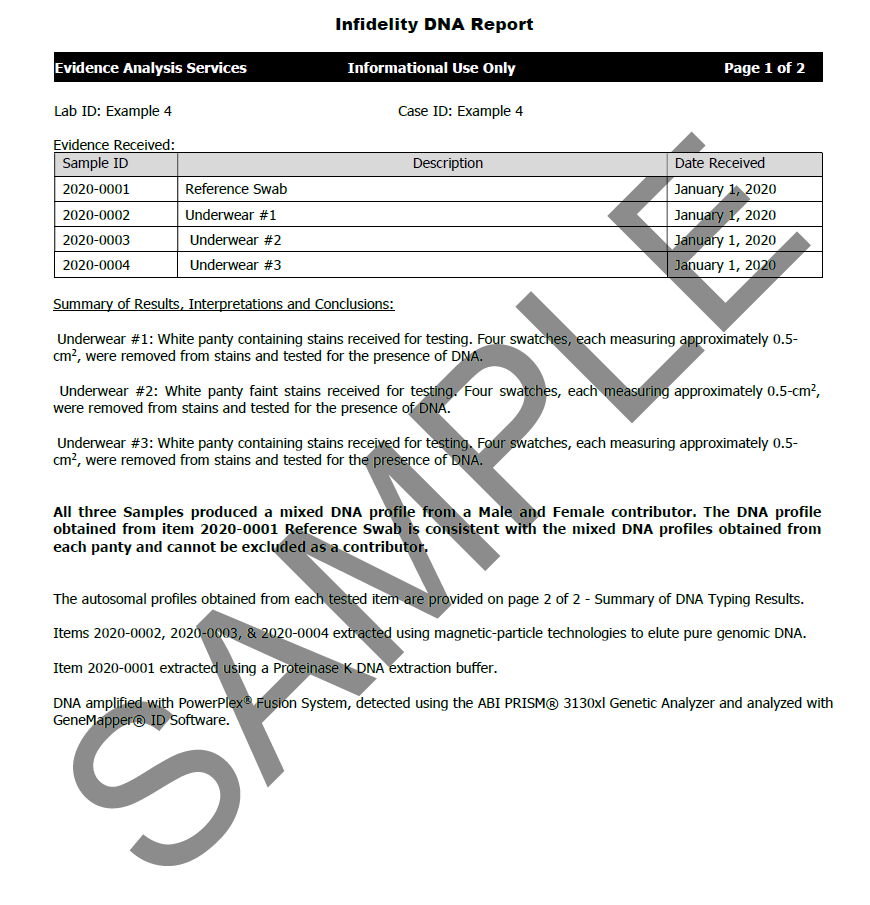
In more complex reports, multiple items may be tested, such as:
Underwear #1
Underwear #2
Underwear #3
You may see statements like:
“All three samples produced a mixed DNA profile from a Male and Female contributor.”
and:
“The DNA profile obtained from the reference swab is consistent with the mixed DNA profiles obtained from each item and cannot be excluded as a contributor.”
This means:
The same individual’s DNA may be present across multiple items
The results are consistent across samples
Understanding the DNA Profile Table
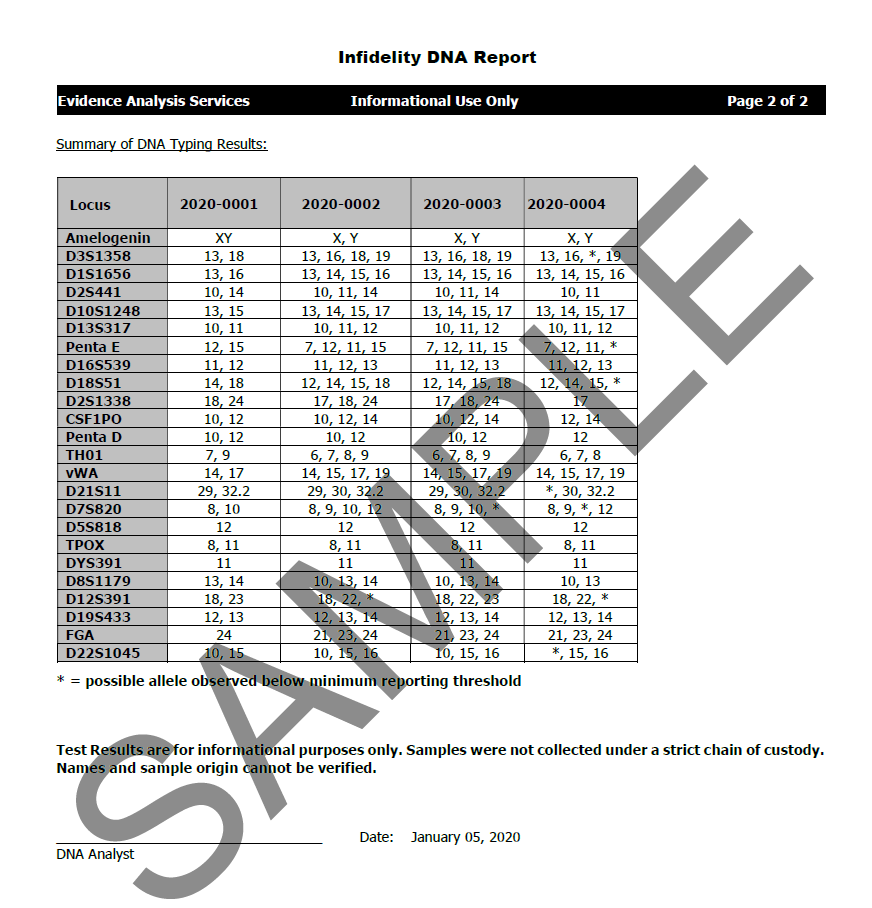
The second part of the report contains a DNA typing table.
This includes:
genetic markers (loci)
allele values for each sample
comparisons between items
This section is used by scientists to:
confirm matches
identify contributors
support conclusions in the summary
For most readers, the summary section is the most important, while the table provides supporting data.
What “Informational Use Only” Means
Your reports include language such as:
“Test Results are for informational purposes only. Samples were not collected under a strict chain of custody.”
This means:
The test is not intended for legal use
The identity of the sample provider cannot be independently verified
Results are for personal knowledge
How to Interpret Infidelity DNA Test Results
When reviewing results, focus on three key findings:
1. Was a biological fluid detected?
Example: semen detected
2. Was DNA found?
DNA profiles may be present or absent
3. Do the DNA profiles match or exclude a reference sample?
included (cannot be excluded) - This is a match to the compared DNA.
excluded - This is no match to the compared DNA.
These three elements together provide the most meaningful interpretation.
Understanding Your Results
Infidelity DNA testing provides scientific information about biological material found on personal items. Reports may identify the presence of biological fluids, detect DNA profiles, and compare those profiles to known individuals.
Understanding how to read these reports helps individuals interpret findings and determine what the results may indicate in their specific situation.
Related Services

How DNA Comparison Testing Works
How do DNA comparison tests work? Learn how laboratories analyze and compare DNA profiles to determine whether two samples may come from the same individual or share a biological connection.

Quick Answer: What Is DNA Comparison Testing?
DNA comparison testing analyzes genetic profiles from two or more samples to determine whether they match or are biologically related. This type of testing is commonly used to compare DNA found on items to known reference samples.
What Is DNA Comparison Testing?
DNA comparison testing is a laboratory process used to determine whether two or more DNA samples are from the same individual or share a biological relationship.
This type of testing is commonly used when biological material is found on an item and needs to be compared to a known individual.
For example, DNA recovered from clothing or other personal items may be compared to a reference sample to determine whether there is a match.
Learn more about how DNA can be found on items here: How DNA Gets on Clothing.
How DNA Comparison Testing Works
DNA comparison testing involves several steps.
1. DNA Extraction
Biological material such as skin cells or bodily fluids is collected from the item being tested. DNA is then extracted from the collected material.
2. DNA Profiling
The laboratory analyzes specific genetic markers in the DNA to create a DNA profile for each sample.
3. Profile Comparison
The DNA profile from the evidence sample is compared to the DNA profile of the reference sample.
4. Result Interpretation
Scientists evaluate whether the genetic markers match and determine whether the samples are consistent with originating from the same individual or a biological relationship.
What Does a DNA Match Mean?
A DNA match means that the genetic markers in two DNA profiles are consistent with coming from the same individual or from individuals who share a biological relationship.
If the profiles do not match, the laboratory can determine that the samples did not originate from the same person.
What Happens If Multiple DNA Profiles Are Found?
In some cases, more than one DNA profile may be detected in a sample. This is known as a mixed DNA sample.
Mixed samples can occur when biological material from multiple individuals is present on the same item.
Laboratories analyze these samples to determine:
how many contributors may be present
whether a specific individual can be included or excluded
Learn more about mixed DNA samples here: What Happens if Multiple DNA Profiles are Found?
Factors That Affect DNA Comparison Results
Several factors can influence DNA comparison testing.
Quality of the Sample
Degraded or limited DNA may make analysis more difficult.
Quantity of DNA
Very small amounts of DNA may not produce a complete profile.
Mixed Samples
The presence of multiple contributors can complicate interpretation.
Environmental Exposure
Heat, moisture, and time can degrade DNA.
How DNA Comparison Testing Is Used
DNA comparison testing is used in a variety of situations.
Common uses include:
comparing DNA from clothing or personal items
evaluating biological evidence
determining whether two samples may come from the same individual
supporting relationship testing in certain cases
This type of testing is often used alongside biological fluid detection testing.
DNA Comparison vs Relationship Testing
DNA comparison testing and relationship DNA testing are related but serve different purposes.
DNA comparison testing
compares unknown DNA to a known sample
determines whether samples match
Relationship DNA testing
compares known individuals
determines biological relationships such as paternity or siblingship
Learn more about relationship DNA testing here: Relationship DNA Testing Explained.
Understanding DNA Comparison Testing
DNA comparison testing provides a scientific method for evaluating whether biological material from different samples may be related or originate from the same individual. By analyzing genetic markers and comparing DNA profiles, laboratories can provide valuable information about biological evidence.
Understanding how this process works helps individuals interpret results and better understand what DNA testing can reveal.
Cited References:
National Institute of Justice. DNA Evidence Basics
https://nij.ojp.gov/topics/articles/dna-evidence-basicsButler, J.M. Fundamentals of Forensic DNA Typing (NIST)
https://www.nist.gov/publications/fundamentals-forensic-dna-typingInternational Society for Forensic Genetics (ISFG)
https://www.isfg.org
How DNA Gets on Clothing: Transfer, Persistence, and Detection
How does DNA end up on clothing? Learn how biological material transfers to fabrics, how long DNA may persist, and how laboratories detect DNA from items such as clothing and bedding.
Quick Answer: How Does DNA Get on Clothing?
DNA can transfer to clothing whenever biological material such as skin cells, saliva, or bodily fluids come into contact with fabric. This transfer may occur through direct contact, secondary transfer, or the presence of bodily fluids. Once deposited, DNA may persist on clothing for varying amounts of time depending on environmental conditions and the type of material involved.
Direct DNA Transfer
The most common way DNA ends up on clothing is through direct contact.
Direct DNA transfer occurs when a person physically touches an item of clothing or when biological material directly contacts fabric.
Examples of direct transfer include:
skin cells left behind during physical contact
saliva transferred through kissing or speaking
bodily fluids deposited on clothing
sweat or other biological material transferred during close contact
During direct contact, cells from the body may become trapped in the fibers of the fabric, leaving behind DNA that can sometimes be detected during laboratory analysis.
Secondary DNA Transfer
DNA may also appear on clothing through secondary transfer.
Secondary transfer occurs when DNA is transferred from one person to an object through an intermediary surface or individual.
For example:
a person shakes hands with someone and later touches clothing
shared items such as bedding or towels transfer cells between individuals
DNA moves between items during handling or storage
Although secondary transfer can occur, the amount of DNA transferred in this way is often smaller than direct transfer.
Biological Fluids That May Leave DNA on Clothing
Clothing may contain DNA from several types of biological material.
Common examples include:
skin cells
saliva
semen
blood
sweat
These materials can contain DNA that may be extracted and analyzed by a laboratory if sufficient biological material is present.
In some cases, laboratories may first test clothing for the presence of a specific biological fluid before attempting DNA analysis.
For example, semen detection testing can determine whether semen is present on an item before DNA profiling is performed.
Learn more about semen detection testing here: Semen Detection Service.
Factors That Affect DNA Persistence on Clothing
Once DNA is deposited on clothing, several factors can influence how long it may remain detectable.
Fabric Type
Different fabrics can retain biological material differently.
Textured or rough fabrics may trap biological material more easily than smooth fabrics.
Environmental Exposure
Environmental conditions such as heat, moisture, sunlight, and bacterial activity can degrade DNA over time.
Items exposed to harsh environments may lose detectable DNA more quickly.
Washing and Cleaning
Washing clothing can reduce the amount of biological material present, but it may not always remove all traces of DNA.
In some situations, detectable DNA may remain after laundering.
Amount of Biological Material
The quantity of biological material deposited on clothing also plays a role.
Larger deposits of biological material may remain detectable longer than very small amounts.
How Laboratories Detect DNA on Clothing
When clothing is submitted for testing, laboratory scientists examine areas most likely to contain biological material.
The testing process may include:
visual examination of the item
screening for biological fluids
DNA extraction from collected material
DNA profiling and analysis
comparison to reference samples when available
Depending on the testing performed, laboratories may report whether DNA profiles were detected and whether those profiles match reference samples.
Presumptive vs Confirmatory Biological Fluid Tests
In forensic and laboratory testing, biological fluid detection methods may be categorized as presumptive tests or confirmatory tests.
Presumptive Tests
Presumptive tests are designed to indicate whether a particular biological fluid may be present. These tests can sometimes react with substances that produce similar chemical signals, so they are considered preliminary indicators.
Common presumptive tests may screen for substances associated with bodily fluids.
Confirmatory Tests
Confirmatory tests are designed to identify biological material with much greater specificity.
For example, some semen detection methods analyze the presence of the human-specific protein semenogelin, which is found in semen. Detecting this protein provides strong confirmation that semen is present on an item.
Confirmatory testing helps laboratories identify biological fluids with greater confidence.
Understanding DNA Evidence on Clothing
The presence of DNA on clothing can provide useful scientific information about biological material that may have come into contact with the item. However, interpreting DNA evidence often requires context.
DNA testing can determine whether biological material is present and may identify contributors to a DNA profile when comparison samples are available.
Understanding how DNA transfers to clothing and how it may persist over time helps explain how biological evidence can sometimes be detected during laboratory analysis.
Perfect. Here are the 3 high-authority sources formatted exactly the way you requested:
Cited References:
National Institute of Justice. DNA Evidence Basics
https://nij.ojp.gov/topics/articles/dna-evidence-basicsGoray, M., Eken, E., Mitchell, R.J., van Oorschot, R.A.H. Secondary DNA Transfer of Biological Substances Under Varying Test Conditions
https://pubmed.ncbi.nlm.nih.gov/19948333/The Royal Society. The Evaluation of Forensic DNA Evidence
https://royalsociety.org/topics-policy/projects/forensic-dna-analysis/
This is not a physical product. This is a service.
We do NOT ship anything to you for this test.
You must ship your items/samples to our laboratory.